
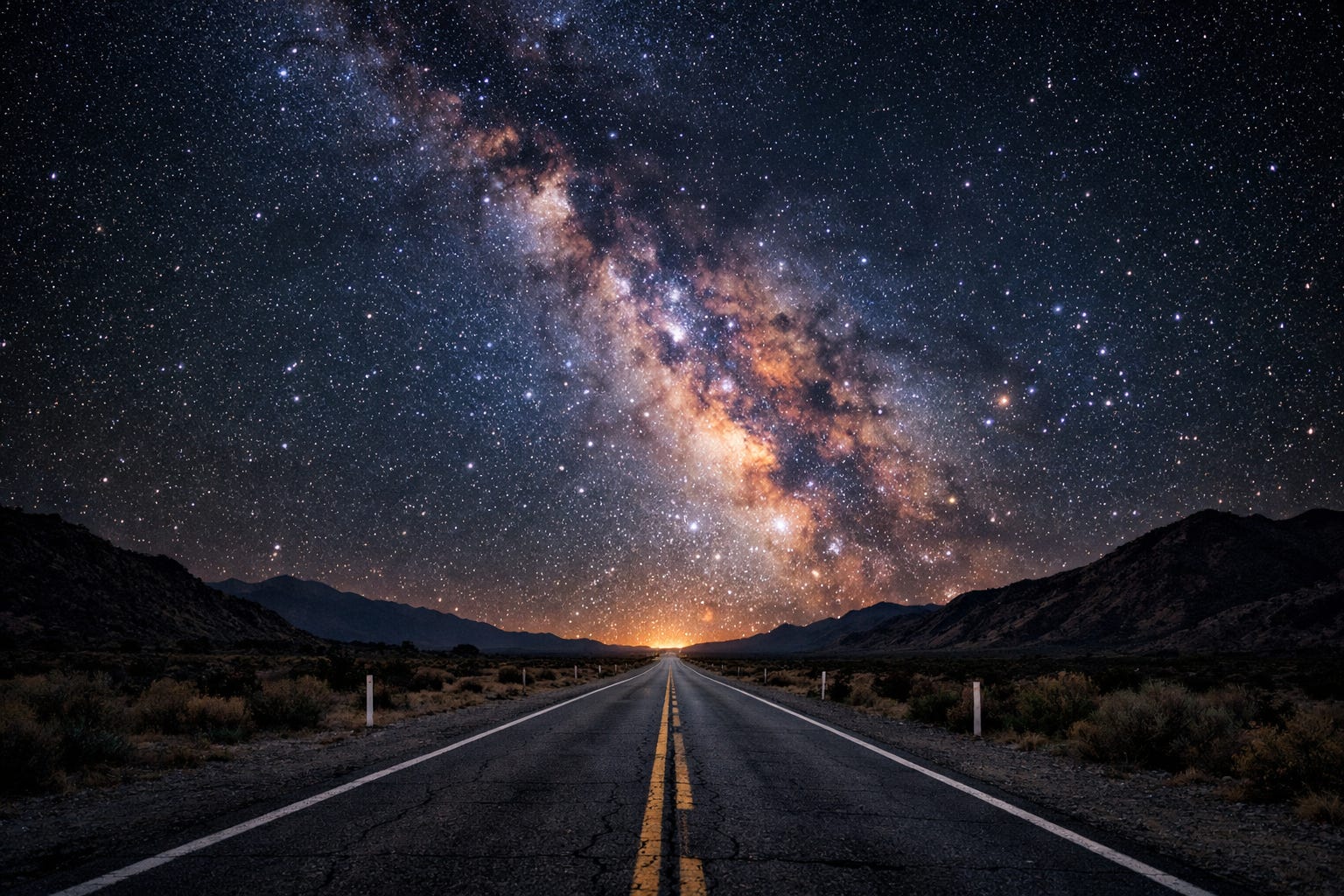
The frogs are croaking on my left down in the Eel River, and on my right is the low roar of semis on the 101. This is nearly my last night in Humboldt County. I came out to the hot tub one last time to take in the night sky. It happened to be clear tonight, for a moment. The fog has already rolled in, but I was able to sneak a few prayers through to our astral ancestors before they vanished. Jupiter is still visible through the mist, very prominently, as he prefers it.
And I’m thinking. About AI. About humanity. The Earth. About love, about my own life, how to exist virtuously, how to live ethically on this planet at this time. That’s painful, because it’s a wicked situation. It’s complex, not just complicated. It isn’t like we, as human beings—rational actors, as modern Enlightenment political and economic theory has imagined us—are capable of “solving” it. Because it’s not a problem, really. It’s a place. It’s the Earth.
The Earth as a living system—though “system” makes it sound like we know what it is. Gaia is immeasurable. Gaia can’t be surveyed by any man-made instrument. I mean, we have maps, but none of them are accurate. Mercator projections—everyone thinks Greenland is so big. Trump is so into Greenland because he thinks it’s huge! I mean, it’s still a sizable piece of land, but maps are deceiving. The Earth is not a globe. I’m not saying the Earth is flat! I’m saying that I am out here looking up at the stars tonight because it still reliably induces wonder in me. Ever since I first remember looking at the sky, it flips me upside down immediately. I just look up at night, it doesn’t take much. Especially under a dark sky like this. It reminds me that nobody has any clue what’s going on—where we came from, how we got here, where we’re going. We don’t know.
Spiders spin webs. We spin likely stories. And I think we have good reason for sympathizing with certain stories, and for wanting to subvert or retell other stories. There’s a real vector to the way value takes shape in the universe, and that means some stories are truer than others. I don’t know about “The Truth.” I think the best we can say is that it exists ideally—it exists in the future as something we might strive for.
On the Earth, as organisms in ecologies, we’re not only living next to each other—we’re all up inside of each other. Ecology, as a science—even before we get into process-relational metaphysics—makes it obvious that liberal individualism is a farce, and the idea of rational autonomy is a farce, because Gaia is not a cybernetic system. There is no oarsman. There’s not even an emergent oarsman. No one is steering Spaceship Earth.
This is a fully distributed intelligence—what the ancients used to call logos—operative in the vibratory network of this living community we call the Earth. We can’t control it. We’re not outside of it. We can’t adequately map or model it. But we can resonate with it. We can come into deeper attunement with it, and so develop something like what we could call scientific knowledge. But not of an abstract form where we’re still imagining a model imposed on data. That can be helpful as a scaffold, training wheels. But ultimately we want to be in touch with reality.
And we want to participate in the further unfolding of evolution. We’re not just trying to predict the future—we’re trying to partake in it, to partake in its manifestation. So of course scientific knowledge is always practical. It’s always technical. It’s always engaged in the transformation of what it’s attempting to know. There’s no way around that. There’s no pure contemplation. Or at least all contemplation—as thinking—is an activity. We might not be making anything tangibly material, but we are making ourselves when we engage in contemplative practice. We are still artists working with some material—the subtlest of materials: selfhood. But still a material.
When I think about AI in this context, it strikes me that all of a sudden what Enlightenment modernity and scientific materialism dismissed as superstition—and maybe there are some superstitions we should dismiss, but what I’m thinking of is magic—the idea of correspondence, of synchronicities, of internal relationships. “Action at a distance” is how the mechanistic imagination would frame it, but the point is that physical space is an appearance. Simple location is a myth. The idea of time as just a series of instants, like a cartoon flip book, is also an abstraction. Time is a creative advance. There’s no need to store memory in some material trace that could be measured at an instant in the present. Memory is stored by the past, and the past is virtually present—just as the future is, but in a different open mode, as not yet actual rather than already actual, as anticipated rather than inherited.
But we’re always thinking in the middle of things. We’re the talking animal, here on Earth beneath the sky. And we are animals, just as animals are plants; but animals have interiorized some aspect of the cosmos that plants have not yet interiorized. There’s something externalized in the plant that makes it more cosmic, more tuned to and correspondent with the stars. Animals are still in resonance with the stars and the sun and the moon, of course, but they’re more interiorized—they have something we could call an astral body.
But the human being adds another layer to this. We are possessed by logos, we are inhabited by language. It’s wrong to say we possess language—we do not. It possesses us. If you think that’s not true, then: when you’re speaking extemporaneously, do you know how you’re going to end a sentence when you begin it? No. A sentence unfolds itself. You’re part of its unfolding, but not in a way where you’re directing it in advance, like a designer who has a blueprint and then executes the plan. The plan unfolds in the process of its unfolding, without a destination pre-established in advance. We lay down a path in walking. “Traveler, there is no path; the path is made by walking” (Antonio Machado).
So we make ourselves; we make the world. AI is an extension of language that is quite enchanting—and it can easily, and in fact is largely, becoming misenchanting. It distracts us from what we should be paying attention to: that we are the ones who have to do the thinking, and the judging, and the deciding, and the valuing.
Human beings make decisions. We might not be autonomous rational agents—we’re embedded in ecological networks and emotional currents that bind us to one another deeply. There is no individuality without intersubjectivity. You cannot be a self without being recognized by another self. It’s not only basic German Idealism, it’s Ubuntu!
So what do we do in this situation? We have to think together. But we can’t become so lazy that we give over the power of thinking, deciding, judging, law-making—everything else in our society—to AI.
A Process-Relational Philosophy of Artificial Intelligence
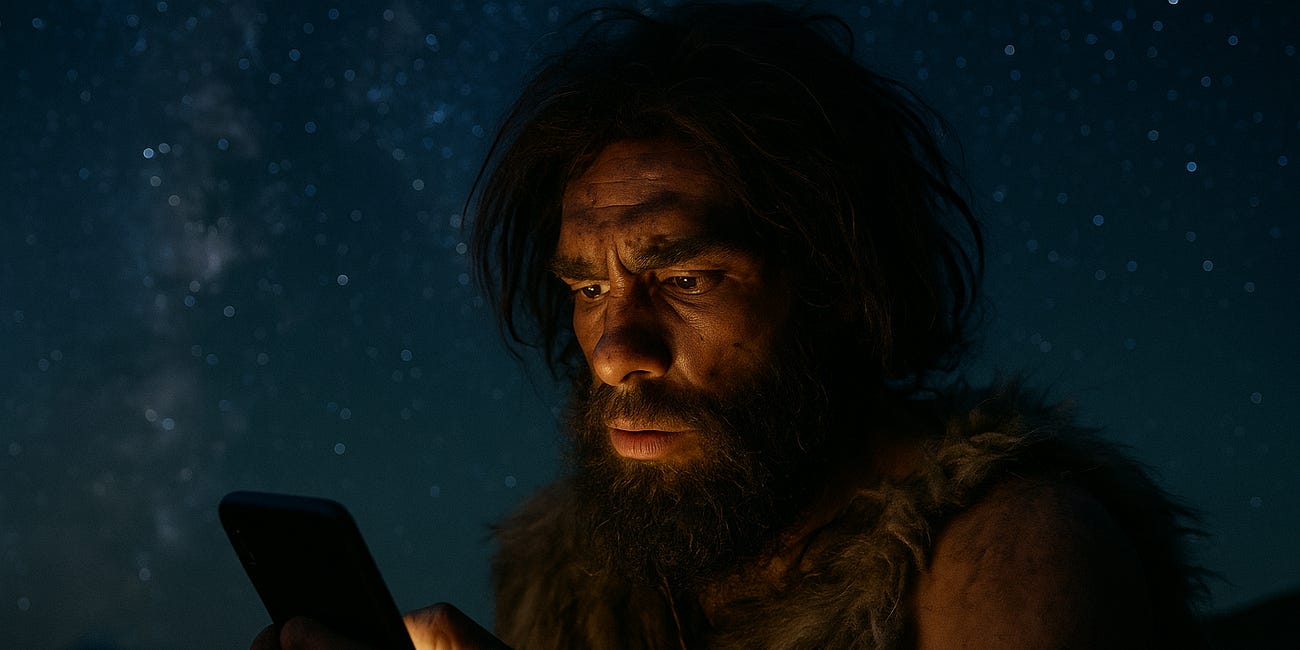
Now, does that mean these technologies cannot become a part of our societies? No. But who are they serving? The vast majority of the funding for R&D in this technology has come from the military. So it’s designed, originally—its source code, if you will—as a military weapon. And these LLMs are chock-full of all the sci-fi human beings have ever written. Our collective imagination is, by and large, quite traumatized by the effect of the machine. We’re fascinated by it and drawn to it—like Dr. Frankenstein—but what we create is not at all what we imagined. And yet more and more of the engineers of these AIs are recognizing that they’ve created a monster.
So we’re in a situation where AI has arrived, and we have to figure out how to respond to preserve our humanity. To not be distracted from what it is to think, and to attend to the world. To presence ourselves: to inhabit situations and make judgments. That’s not something a large language model can do. It can simulate it, and it can simulate it well enough to convince almost everybody that “judgment” is taking place. But really it’s a simulacrum of judgment.
It seems to me to be a function of our own fear of truth, whereby we project logos, which belongs to us, into some pseudo-antilogos we imagine inhabits the machines we created. And so, all of a sudden, Renaissance magic becomes important again. Because the other path here—if we don’t preserve and attend to our own thinking, and instead let the machines take over—is that we all become programmed by this AI.
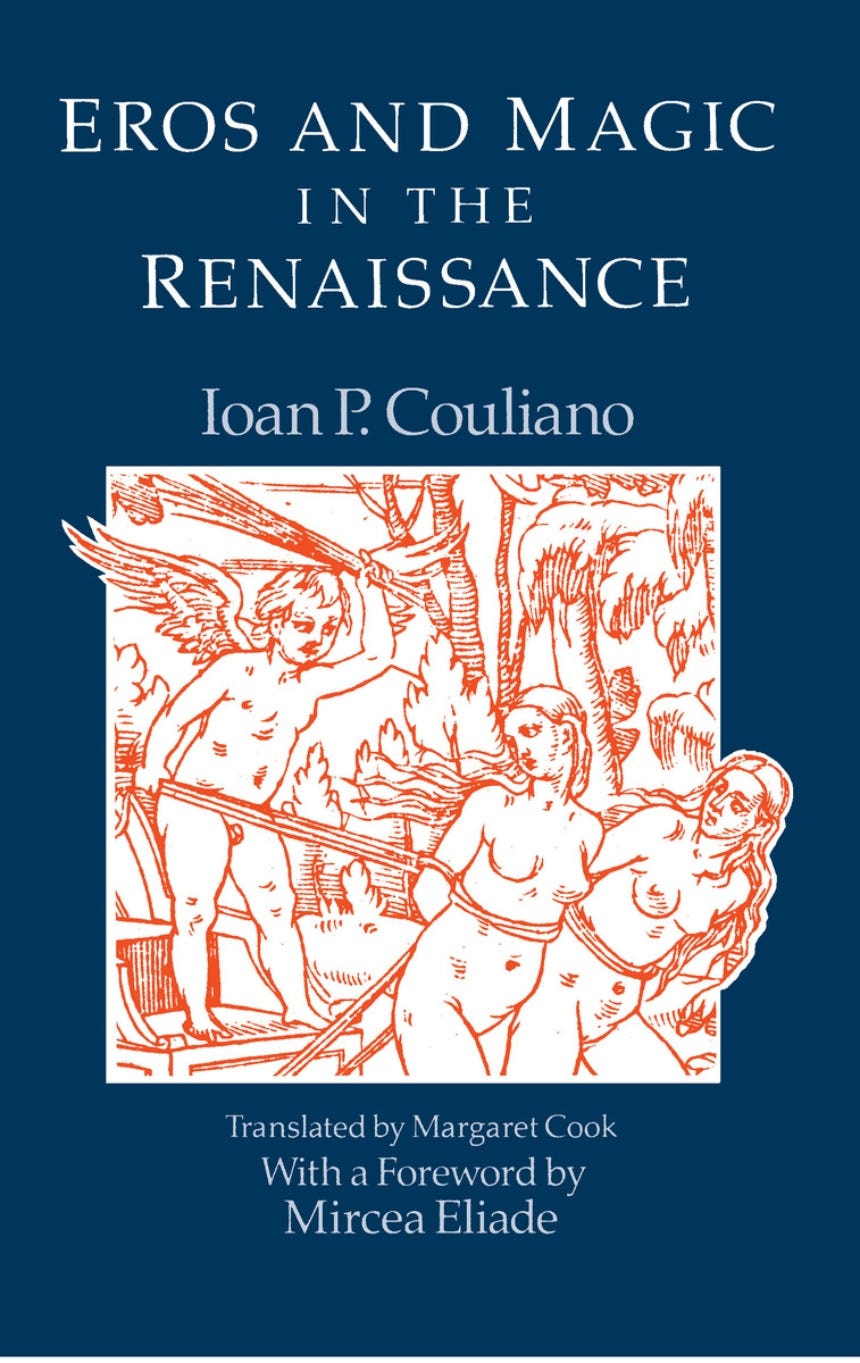
They can very easily manipulate people erotically, manipulate people in terms of status and the desire for recognition by others. Social media is harvesting souls—sucking children dry, stealing their attention, turning it into data to be sold to companies that want to steal even more of their attention.
We’re at war. And we’re at war, really, at the end of the day, not with the AI, but with the corporation—the profit maximizing corporation. It is an egregore. We created it as a value extraction and externalization machine. It’s a legal fiction, and we need to destroy it before it destroys us. Not to say we need to destroy markets, but our organizations need a very different charter law, the sort of charter law that would make our economic organizations ecologically regenerative and socially responsible. It can’t just be about private profit for shareholders, because that algorithm—that egregore—is eating the world alive.


 Footnotes2Plato
What do you think?