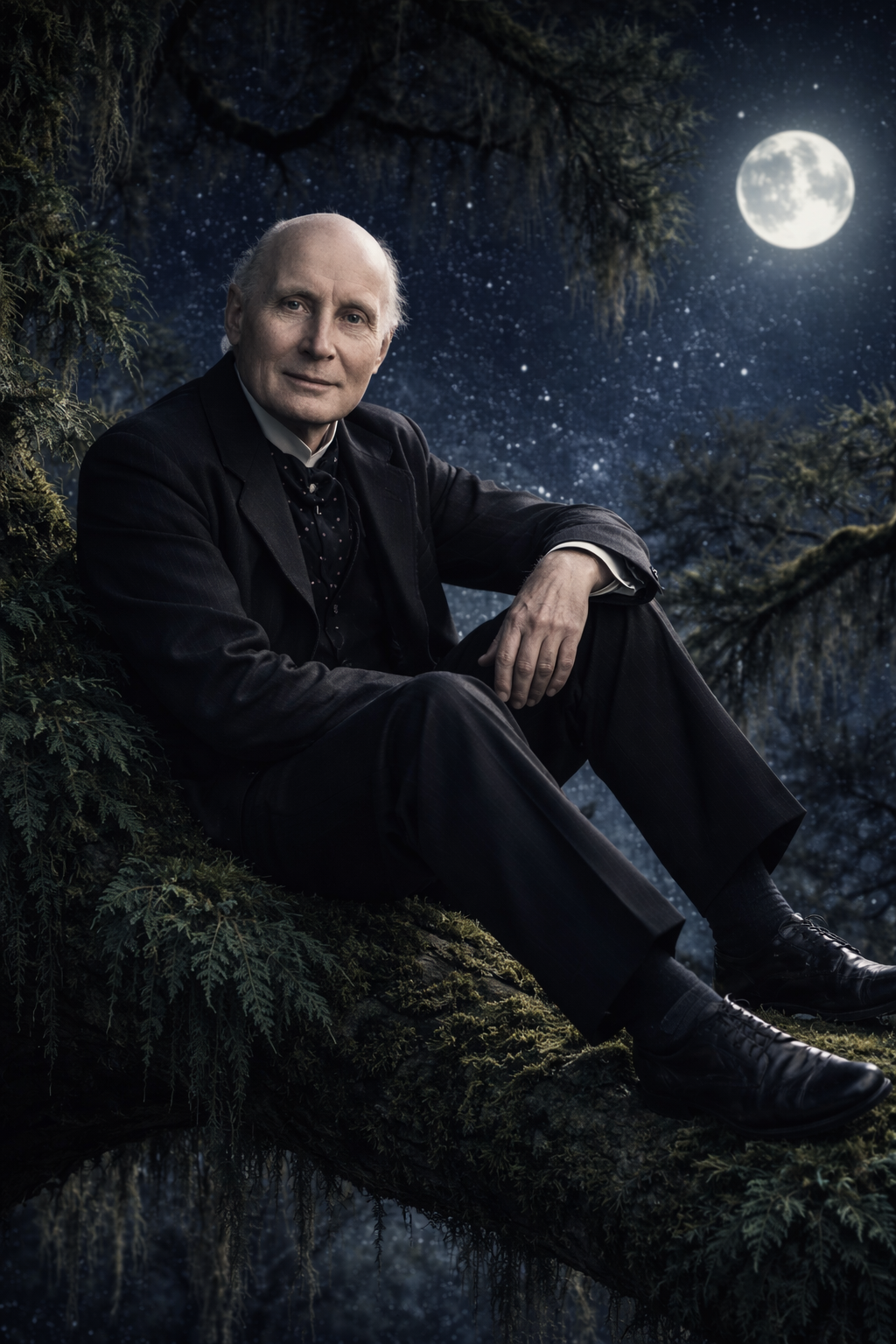
“The safest general characterization of the European philosophical tradition is that it consists of a series of footnotes to Plato.”
–Alfred North Whitehead

  • Power and Presence in Theology

    Another response to NRG’s questions for me on Pharyngula: I have trouble conceiving of God as all-powerful because of the problem of evil and my experience of human freedom. I associated God’s omnipresence with “will” even though, for God, there is really nothing to “do.” From the “perspective” of eternity, God is already everywhere and everywhen Read more

    , , ,

  • God did it, or aliens?

    “NRG” posting over on Pharyngula asks me: Why impute an admittedly Unknowable Omni God to explain currently inexplainable phenomena, if it’s much more reasonable, based on what we actually know, to assume that other citizens of the universe, evolved like us but to a much greater degree, are responsible for such phenomena? To make it Read more

    , ,

  • Christianity and Ecology: Response to Glenn Beck

    Glenn Beck’s segment on Christianity and the environmentalist movement. My response: Read more


  • Natural Science and Spiritual Science

    My recent comments on Pharyngula Excerpts from my comments: I should have written “all-loving” instead of “all-powerful” twice. Just a typo, nothing esoteric. The “etc.” was a placeholder for all the other typical attributes (infinite, eternal…). I wouldn’t say these attributions are necessarily incorrect, they are just inadequate descriptors. Cataphatic theology must be balanced by Read more


  • PZ Myers’ will never believe in God

    PZ Myers’ blog post: http://scienceblogs.com/pharyngula/2010/10/eight_reasons_you_wont_persuad.php Some excerpts from my comments (beginning around #403): The sort of god PZ has decreed impossible to believe in has little in common with Augustine’s, or Plotinus’, or Aquinas’, or with any other great theologian’s God. Natural science is epistemically closed to theological issues, not because they are unreal, but Read more

    , , ,

  • Consciousness: Problem, Paradox, or Practice?

    A quick contextualizing note for those who are just joining the tangled thread of my recent blogalogue concerning the nature of consciousness and its relationship with the nervous system and surrounding cosmos: Last month, Steve Ramirez, a PhD candidate at MIT, posted an entry on his blog (http://okaysteve.wordpress.com/) concerning neuroscience’s supposed successes explaining the “problem” of consciousness purely Read more

    , ,

“In one sense philosophy does nothing. It merely satisfies the entirely impractical craving to probe and adjust ideas which have been found adequate each in its special sphere of use. In the same way the ocean tides do nothing. Twice daily they beat upon the cliffs of continents and then retire. But have patience and look deeper; and you find that in the end whole continents of thought have been submerged by philosophic tides, and have been rebuilt in the depths awaiting emergence. The fate of humanity depends upon the ultimate continental faith by which it shapes its action, and this faith is in the end shaped by philosophy.” 

Alfred North Whitehead