In our last Whitehead Research Project editorial board meeting, a very interesting issue came up as the critical edition of Science and the Modern World moves toward publication.
It turns out that the position of a single “s” opens a huge can of metaphysical worms. In Science and the Modern World, there is a passage where an “isolated system” is described as free from “casual contingent dependence” upon the rest of the universe. Some might be tempted to assume this was a typo: surely Whitehead meant causal, not casual?
Here is the passage:
“The ‘isolated’ system is not a solipsist system, apart from which there would be nonentity. It is isolated as within the universe. This means that there are truths respecting this system which require reference only to the remainder of things by way of a uniform systematic scheme of relationships. Thus the conception of an isolated system is not the conception of substantial independence from the remainder of things, but of freedom from casual contingent dependence upon detailed items within the rest of the universe. Further, this freedom from casual dependence is required only in respect to certain abstract characteristics which attach to the isolated system, and not in respect to the system in its full concreteness.” (p. 46)
If Whitehead meant causal dependence, then he would seem to be saying that an isolated system is, at least in some respect, freed from causal relation to the rest of the universe. But that would be deeply un-Whiteheadian. For Whitehead, there are no vacuum-sealed bits of reality. An isolated system is not a solipsist system. It is ideally abstracted for scientific purposes from certain contingent detailed entanglements, while remaining internally related to the whole relational order of nature.
If he meant casual dependence, “casual” here would mean accidental, contingent, adventitious. On this reading, Whitehead is not saying the system is exempt from causal connectedness. He is saying it can be treated, in abstraction, as exempt from the merely local and contingent intrusions of this or that item elsewhere in the universe.
Thus a seemingly innocuous editorial question quickly explodes into a high-stakes cosmological question.
Whitehead uses similar language in The Principle of Relativity, where he is explicitly criticizing Einstein’s general relativity. In the preface, he writes:
“I deduce that our experience requires and exhibits a basis of uniformity, and that in the case of nature this basis exhibits itself as the uniformity of spatio-temporal relations. This conclusion entirely cuts away the casual heterogeneity of these relations which is the essential of Einstein’s later theory.”
Later, he puts the point this way:
“The significance of events is more complex. In the first place they are mutually significant of each other. The uniform significance of events thus becomes the uniform spatio-temporal structure of events. In this respect we have to dissent from Einstein who assumes for this structure casual heterogeneity arising from contingent relations.” (p. 25)
And again:
“The divergence between the two points of view as to space-time, that is to say, as to whether it exhibits relations between events or relations between objects in events is really of the utmost importance in the stage of physical science. If it be a relatedness between events, it has the character of a systematic uniform relatedness between events which is independent of the contingent adjectives of events. In this case we must reject Einstein’s view of a heterogeneity in space-time. But if space-time be a relatedness between objects, it shares in the contingency of objects, and may be expected to acquire a heterogeneity from the contingent character of objects. I cannot understand what meaning can be assigned to the distance of the sun from Sirius if the very nature of space depends upon casual intervening objects which we know nothing about. Unless we start with some knowledge of a systematically related structure of space-time we are dependent upon the contingent relations of bodies which we have not examined and cannot prejudge.” (p. 58-59)
And finally:
“Thus the constitutive character of nature is expressed by ‘the contingency of appearances’ and ‘the uniform significance of events.’ These laws express characters of nature disclosed respectively in cognisance by adjective and cognisance by relatedness. This doctrine leads to the rejection of Einstein’s interpretation of his formula as expressing a casual heterogeneity of spatio-temporal warping, depending upon contingent adjectives.” (p. 65)
These passages make it much harder to claim “casual” in Science and the Modern World is a typographical transposition. Whitehead is using the word deliberately. His intended meaning is not causality but contingency: the reduction of the necessary relational structure of nature to local variations in the distribution of mass. His worry is that Einstein’s theory, as he understood it, made the metric structure of space-time depend too much upon the contingent distribution of matter. Whitehead wanted to preserve a more basic uniformity of spatio-temporal relations, some general relational scheme by which events are mutually significant of one another. Without such uniformity, nature threatens to dissolve into what he calls “casual heterogeneity.”
This also raises a retrospective question about Process and Reality. In the corrected edition, Griffin and Sherburne note places where they changed “casual” to “causal,” on the assumption that “casual” was likely a typographical corruption. In at least one case, they explain that the context concerns “the problem of interaction between two different types of substances,” and therefore must be a problem of causality. In another case, they acknowledge that either word could make sense, and that the emendation does not affect Whitehead’s main point.
But the Science and the Modern World and Principle of Relativity evidence suggests that their editorial confidence need revisitings. It is at least possible that Griffin and Sherburne corrected away a genuine usage. “Casual” may not always be a printer’s slip. Sometimes it may be Whitehead’s way of naming the accidental, adventitious, or contingent character of a relation, contrasted with the deeper systematic relatedness required by his philosophy of nature.
Of course, Whitehead’s reading of Einstein’s interpretation of general relativity is itself controversial. Whether or not it conflicts with Whitehead’s philosophy of nature, later developments in relativistic cosmology have tended to assert that general relativity can support global models of the universe (eg, the Big Bang theory, for one). Regardless of the deeper metaphysical issues at stake, the task of a critical edition is not to make Whitehead agree with later physics by silently correcting him into a more contemporary position. Our task is to preserve as precisely as possible what he was trying to say.
The takeaway for me is that editorial work in philosophy is as transdisciplinary as it gets! Many kinds of judgment are necessary simultaneously: typographical judgment, grammatical judgment, historical judgment, speculative judgment, and scientific judgment. Is this a printer’s error? Is the phrase awkward but intentional? Does the author use the same term elsewhere? Does the proposed correction clarify the text, or dramatically invert the argument? Does a later scientific consensus expose a mistake, or only help us understand the horizon within which the author was writing?
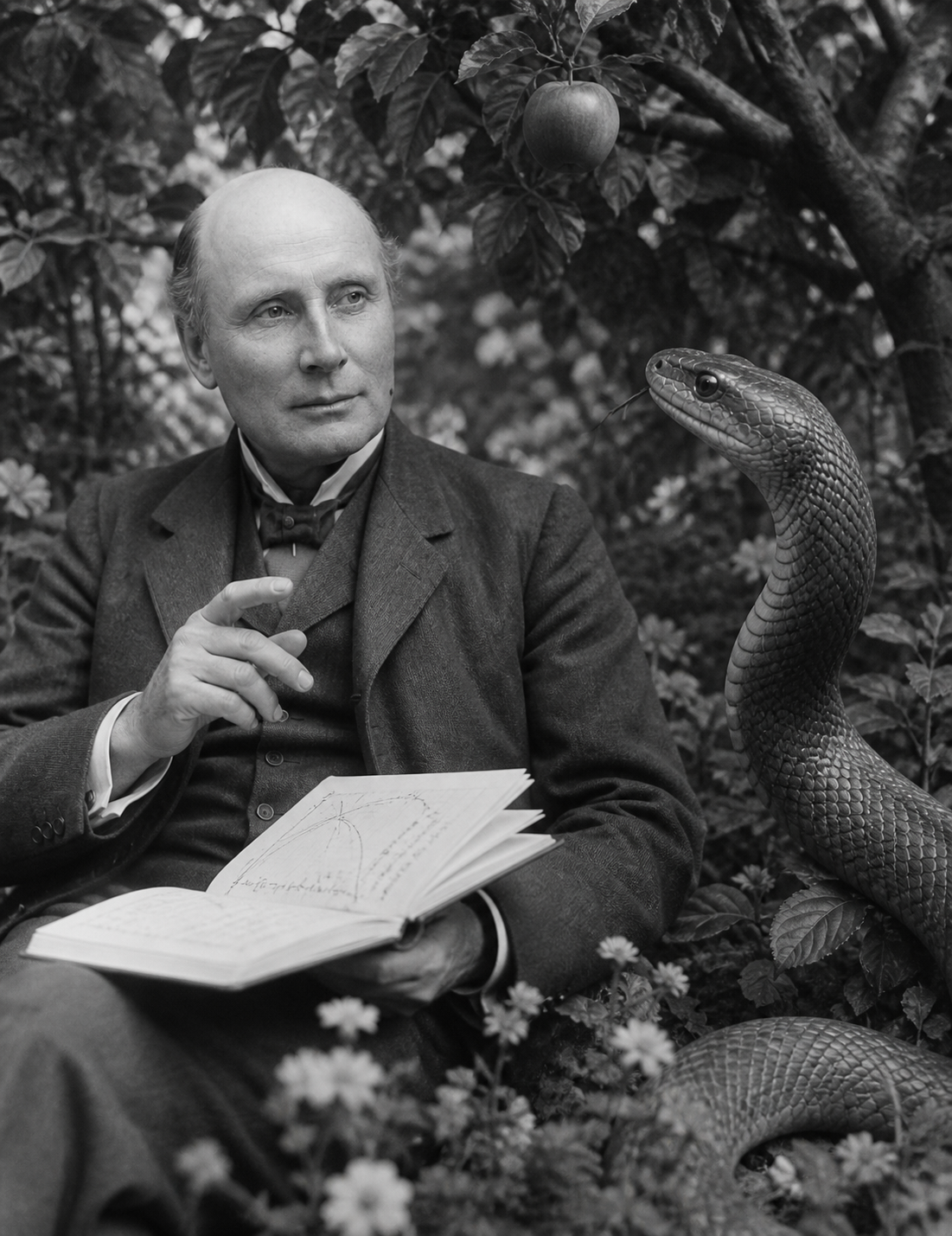
A misplaced “s”—like the serpent in the garden—threatens to tempt us into imagining Whitehead is denying universal causal relatedness. A correction made in the name of what seems like common sense can end up erasing the marvelously insightful strangeness of Whitehead’s attempt to think otherwise.


What do you think?