
Category: Hume
-

Sundays with Whitehead
Below are a couple of video sessions from my course on Whitehead’s Process & Reality.
-
![Physicalism and Its Discontents: A Study in Whitehead’s Panexperientialist Alternative [draft]](https://footnotes2plato.com/wp-content/uploads/2019/09/fluorescence.jpg?w=1024)
Physicalism and Its Discontents: A Study in Whitehead’s Panexperientialist Alternative [draft]
UPDATE: Here is a PDF of the final draft accepted for publication under the revised title “The Varieties of Physicalist Ontology: A Study in Whitehead’s Process-Relational Alternative.” I’ve just finished drafting this article, which will hopefully be featured in a special issue of the Journal of Philosophy, Theology, and the Sciences focused on panpsychism. It still…
-

On the Matter of Life: Towards an Integral Economics
I’m posting a revised version of a long essay I wrote a decade ago. It draws on thinkers including Sri Aurobindo, Jean Gebser, Pierre Teilhard de Chardin, William Irwin Thompson, Francisco Varela, Alfred North Whitehead, and Alf Hornborg in search of a more integral approach to economics. I had not yet encountered the social ecology…
-

Whitehead’s Quantum of Explanation: Thinking with Auxier and Herstein
“Our central idea is that concrete existence explains the abstract aspects of experience and not vice-versa.” -Auxier and Herstein “So long as necessity is taken to be the guarantor of rationality, the conception of rationality advocated will be as useless to science as it is to practical life.” -Auxier and Herstein Below I offer some…
-

Fall 2018 Online Course: “Mind & Nature in German Idealism”
I’ll be offering this course for the second time in Fall 2018 at CIIS.edu (the semester runs from late August through mid-December). Special students and auditors are welcome to enroll! Email me at msegall@ciis.edu for more information about registration.
-
Introduction to Process Philosophy
Below is a lecture recorded for the online course PARP 6060 02 – Introduction to Philosophy, Cosmology, and Consciousness at CIIS.edu. I first discuss the meaning of philosophy from a Whiteheadian perspective, then run through a brief history of philosophy as relevant to process thought (Parmenides, Heraclitus, Plato, Aristotle, Copernicus, Descartes, Newton, Kant and his…
-
My Online Course this Fall: PARP 6133 – Whitehead’s Adventure in Cosmology
I’m teaching another online graduate course for CIIS.edu this Fall (Aug-Dec) called Whitehead’s Adventure in Cosmology: Toward a Physics of the World-Soul (PARP 6133). Here is the proposed syllabus. Auditors and Special Students are welcome to enroll. Email me at msegall@ciis.edu for more information about how to do this.
-
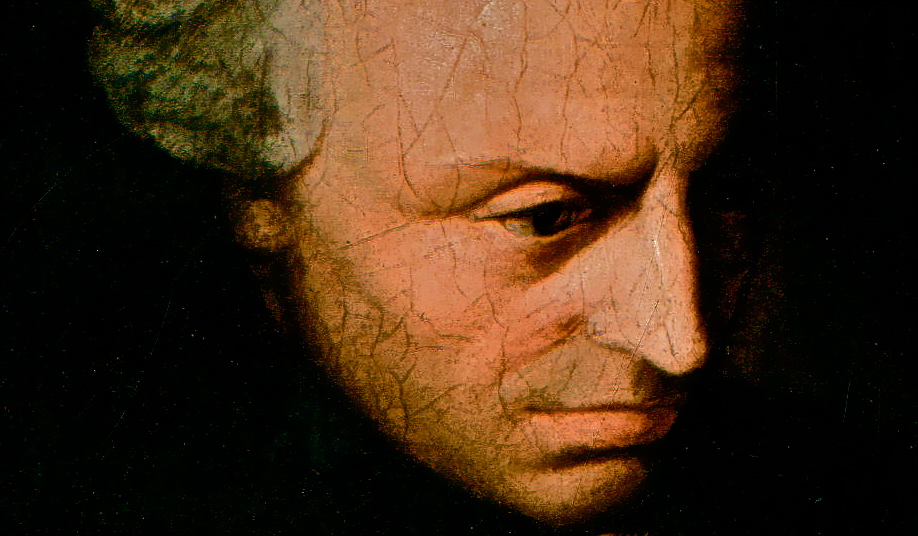
Diagramming German Idealism
I’m teaching an online graduate course called Mind and Nature in German Idealism this semester. Below I am sharing several diagrams that I’ve developed to depict Kant’s transcendental method as it evolves through the first three critiques, as well as Fichte’s radicalization of the Kantian project. I hope to continue developing this diagram to elucidate Schelling, Goethe,…
-

Mind and Nature in German Idealism: A Spring Course at CIIS
There’s still a few weeks left to enroll in my spring course at CIIS.edu as an auditor or special student. Mind and Nature in German Idealism will start on January 17th and run until May 8th. Email me if you are interested and I can share the syllabus and/or enrollment instructions (msegall@ciis.edu).
-
Mind and Nature in German Idealism, a graduate course
I’m very excited to teach a 10-week online course at CIIS next semester (Spring 2017, running from Jan – Mar) called Mind and Nature in German Idealism. The course includes readings and lectures on Kant, Fichte, Goethe, Hegel, and Schelling. Note that you do not need to be enrolled in a graduate program at CIIS in…
-
PDF of my Dissertation
Here’s a PDF of the version I submitted to the UMI database. I plan to substantially revise this before publishing it as a book sometime in the next year. But for now, I welcome feedback on the current draft. Cosmotheanthropic Imagination in the Post-Kantian Process Philosophy of Schelling and Whitehead
-
Online course this Fall: “Mind and Nature in German Idealism”
Below is the introductory lecture of a 10-week undergraduate course called “Mind and Nature in German Idealism” that I’m hoping will run this coming Fall (2014) for the University of Philosophical Research. If you’re an undergrad looking for an independent study, let me know.
-
Michael Marder’s Vegetal Philosophy as an Example of Etheric Imagination
The following is excerpted from my dissertation proposal, which is tentatively titled “Etheric Imagination in Process Philosophy from Schelling to Whitehead.” I’ll be posting more selections in the coming days. ………………………………………………….. To become rooted in the etheric forces of imagination, the process philosopher must learn to think like a plant. Michael Marder’s “vegetal metaphysics”80 provides a contemporary…
-
Schellingian Reflections on Latour’s 2nd Gifford Lecture – “A Shift in Agency, With Apologies to Hume”
Latour is introduced by professor of physics Wilson Poon, who publicly confesses to being a great admirer of Latour’s work. Latour, thinly veiling how tired he is of the “Science Wars,” thanks him for the “rare confession”: “I don’t have many friends among physicists.” Poon contributes to a course at the University of Edinburgh on…
-
The Varieties of Causal Experience
Michael over at Archive-Fire has a new post up distinguishing his notion of epistemic withdrawal from Harman’s ontological withdrawal. While claiming to hold tight to an embodied account of mind, Michael nonetheless wants to carve out a distinction between two kinds of interaction: mental and physical. Mental interaction is always detached and abstract due to…
-
Whitehead: Aesthetics as First Philosophy
I’ve jumped from Meillassoux‘s After Finitude to reading Steven Shaviro‘s book on Whitehead, Kant, and Deleuze Without Criteria (2009). A few thoughts have occured to me… Whitehead’s philosophy of organism possesses an immunity to post-Kantian skepticism, since it arises out of a radically embodied characterization of sensory experience. Empiricism, for Whitehead, does not mean paying…
-
PZ Myers’ will never believe in God
PZ Myers’ blog post: http://scienceblogs.com/pharyngula/2010/10/eight_reasons_you_wont_persuad.php Some excerpts from my comments (beginning around #403): The sort of god PZ has decreed impossible to believe in has little in common with Augustine’s, or Plotinus’, or Aquinas’, or with any other great theologian’s God. Natural science is epistemically closed to theological issues, not because they are unreal, but…
 Footnotes2Plato