
Category: Aristotle
-

“Retrieving Realism: A Whiteheadian Wager” published in IJTS
Retrieving Realism: A Whiteheadian Wager (PDF) Published in International Journal of Transpersonal Studies, Volume 36, Issue 1 (2017) Abstract: This essay argues that the organic realism of Alfred North Whitehead (1861-1947) provides a viable alternative to anti-realist tendencies in modern and postmodern philosophy since Descartes. The metaphysical merits of Whitehead’s philosophy of organism are unpacked in…
-
Book Review of Dreyfus & Taylor’s “Retrieving Realism”
World Futures: The Journal of New Paradigm Research just published my review of Hubert Dreyfus and Charles Taylor’s book Retrieving Realism (2015). Read my review here (it may be behind a paywall, sorry about that). I have another expanded article on their book coming out very soon in the International Journal of Transpersonal Studies that…
-
The Place of Life in the Cosmos (draft of 11th International Whitehead Conference paper)
Below is the draft of a paper I’ll present at next week’s International Whitehead Conference in the Azores. Feedback appreciated! 2017 International Whitehead Conference Matthew T. Segall The Place of Life in the Cosmos: Feeling the Origin of Organism “A philosophic outlook is the very foundation of thought and of life. The…
-
My Online Course this Fall: PARP 6133 – Whitehead’s Adventure in Cosmology
I’m teaching another online graduate course for CIIS.edu this Fall (Aug-Dec) called Whitehead’s Adventure in Cosmology: Toward a Physics of the World-Soul (PARP 6133). Here is the proposed syllabus. Auditors and Special Students are welcome to enroll. Email me at msegall@ciis.edu for more information about how to do this.
-

Waking Cosmos Podcast Interview
Thanks to Adrian Nelson for hosting this conversation on his YouTube channel Waking Cosmos.
-
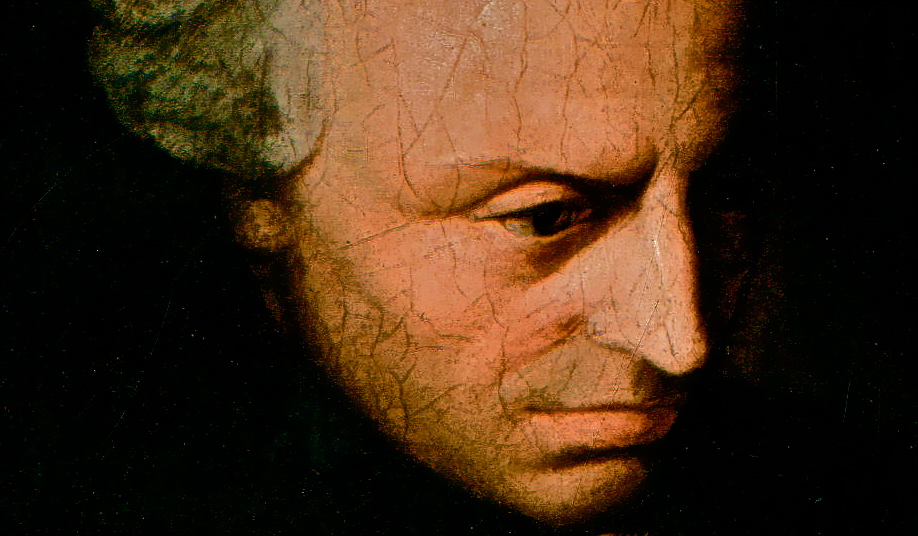
Diagramming German Idealism
I’m teaching an online graduate course called Mind and Nature in German Idealism this semester. Below I am sharing several diagrams that I’ve developed to depict Kant’s transcendental method as it evolves through the first three critiques, as well as Fichte’s radicalization of the Kantian project. I hope to continue developing this diagram to elucidate Schelling, Goethe,…
-
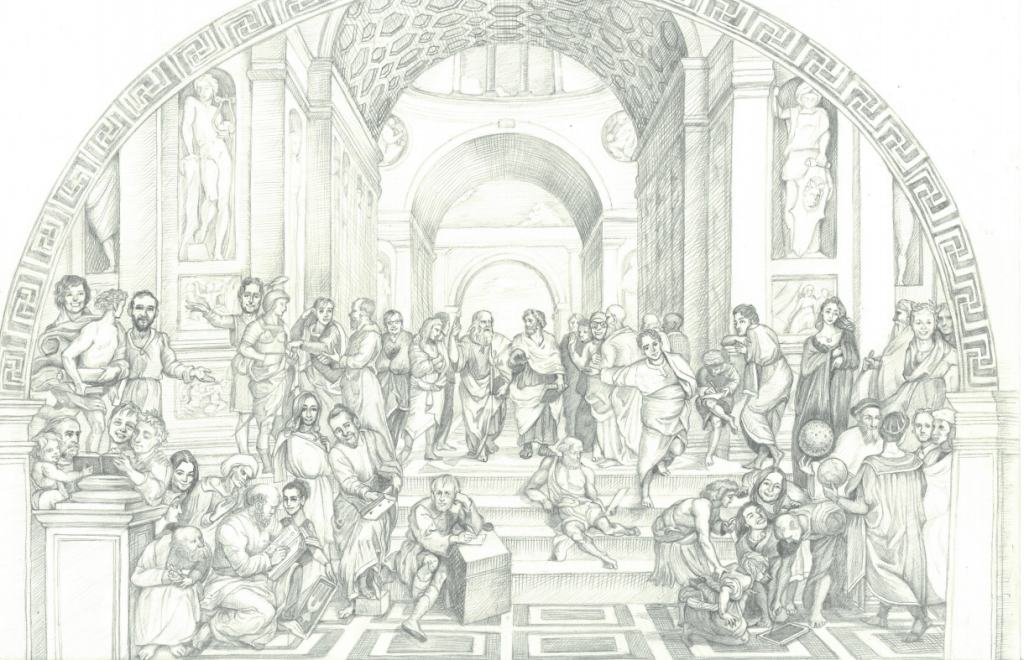
A Rendition of Raphael’s “School of Athens”
A doctoral student in the course I co-taught last semester (Brief History of Western Thought) created this wonderful drawing based on Raphael’s “School of Athens.” Several of the figures are renditions of the students and faculty in our class. I thought I’d share it. Any guesses which one is me?
-
Minding Time: Chronos, Kairos, and Aion in an Archetypal Cosmos
Notes for a brief talk I gave today at CIIS. [Update (July 15, 2016): This talk was expanded into an article published in Archai: The Journal of Archetypal Cosmology] ……………………………………………………………………………….. “…what is time? Who can give that a brief or easy answer? Who can even form a conception of it to be put into words? Yet…
-
Process, Relationality, and Individuality: Graham Harman and Alfred Norht Whitehead (response to Jonathan Cobb)
Relevant links to the argument between me, Levi Bryant, and Graham Harman: Levi Bryant Mis-reading Whitehead? Harman’s response to me Whitehead’s Process Atomism (Response to Graham Harman) Object as subject-superject, or why Harman is wrong about Whitehead Occasionalism in Whitehead and Harman Harman’s Crucified Objects and Whitehead’s God: More on Withdrawal
-
Science, Religion, and Philosophy: Responding to a conversation b/w L. Krauss, D. Dennett, and M. Pigliucci
Above is my response to the recent conversation between Krauss, Dennett, and Pigliucci. If you don’t know the context of their meeting, see the links below. I agree with Dennett that cosmology is an area of natural science where we are not even close to being done with philosophy. My own small contribution to the…
-
Agency in the Universe: Towards a Physics of the World-Soul
My book on Whitehead’s relevance to scientific cosmology.
-
Thinking on a Walk in the Woods: The Ideality of Matter and the Materiality of Ideas
Something of a response to Levi Bryant/LarvalSubjects on “hylephobia.” See also this post on the Astrality of Materiality.
-
On the need for mediating concepts…
I posted this on FaceBook in a thread about humanities departments needing to get over Aristotle’s biology and was told to stop spamming, so I suppose I’d better just post it here instead. …………….. If contemporary biology is going to throw out “purpose” and “essence” as concepts, it needs to throw out correlate concepts like…
-
Questions concerning the place of imagination in cosmology… (while reading Ed Casey and Catherine Keller)
“In my view the creation of the world is the first unconscious act of speculative thought; and the first task of a self-conscious philosophy is to explain how it has been done.” -Whitehead Four of us met a few days back to discuss the first 75 pages of Ed Casey’s The Fate of Place: A…
-
Michael Marder’s Vegetal Philosophy as an Example of Etheric Imagination
The following is excerpted from my dissertation proposal, which is tentatively titled “Etheric Imagination in Process Philosophy from Schelling to Whitehead.” I’ll be posting more selections in the coming days. ………………………………………………….. To become rooted in the etheric forces of imagination, the process philosopher must learn to think like a plant. Michael Marder’s “vegetal metaphysics”80 provides a contemporary…
-
Teleology in Science? Purpose in Nature?
I’ve just read Grant Maxwell’s critique of a HuffPo piece by Matthew Hutson. I enjoyed his rebuttal of Hutson’s blanket rejection realism regarding teleology. I am also enjoying the discussion Grant is having with Hutson down in the comments. I do not think Hutson has read the work of organic/creative finalists like Bergson or Whitehead.…
-
[Final Draft] Worldly Religion in Deleuze and Whitehead: On the Possibility of a Secular Divinity
Below I’ve written a paper using the ideas of Gilles Deleuze and Alfred North Whitehead to construct a secular divinity. For Deleuze, this is an especially serious act of buggery on my part. Deleuze of course approved of that method in his own projects, but I wonder if he would approve of the baby jesus…
-
The Varieties of Naturalistic Philosophy
If a pushy philosopher were to back me into a corner and force me to choose one or the other, naturalism or supernaturalism, I would choose naturalism. But I’d find myself wanting to ask, as Socrates might, what is meant by “nature”? Physics becomes metaphysics as soon as the word–”nature”–is pronounced. The logos of language…
-
Gilles Deleuze’s and Arthur Young’s Bergsonisms: An Outline and Notes
I’ve just finished Gilles Deleuze’s book Bergsonism (1990). Here is my outline of the text: Deleuze’s Bergsonism: Notes and Outline. Bergson suggested that the Absolute had to be approached from two sides, the scientific and the metaphysical. Science/Intellect considers the universe according to a series of states. Metaphysics/Intuition considers the universe according to the self-differentiation of…
 Footnotes2Plato