Tag: god
-

The Purpose and Profundity of Whitehead’s Metaphysics (a reply to Massimo Pigliucci)
The following is a response to Massimo Pigliucci’s recent blog post about process metaphysics and Whitehead. I keep a relatively close eye on Pigliucci’s philosophical work, as there is plenty of convergence in our views on several issues, including, as he says in his title, “the promise of process metaphysics.” Despite some convergences, I part…
-

A review of Michael Hogue’s “American Immanence: Democracy for an Uncertain World” (2018)
MICHAEL S. HOGUE, American Immanence: Democracy for An Uncertain World. New York: Columbia University Press, 2018: 238 pages. [Reviewed by: MATTHEW D. SEGALL, Philosophy and Religion Department, California Institute of Integral Studies, 1453 Mission Street, San Francisco, California, 94103, USA. <msegall@ciis.edu>.] Michael Hogue has written a timely theopolitical intervention drawing from (and contributing to) the American…
-
Toward an Integral “God” – a dialogue with Layman Pascal
Thanks to Layman and Bruce Alderman at The Integral Stage for hosting these dialogues.
-

Sundays with Whitehead
Below are a couple of video sessions from my course on Whitehead’s Process & Reality.
-

Whitehead’s Final Interpretation of Reality: God and the World
Whitehead tells us at the start of the final part of Process & Reality (“Final Interpretation”) that the chief danger in philosophy is narrowness in the selection of evidence. For many modern, scientifically inclined philosophers, this narrowness has taken the form of an all too easy rejection of the world’s religious traditions and the religious experience which gave rise…
-

The Side View podcast
Adam Robbert interviewed me over on The Side View Podcast. Check it out HERE. We discussed speculative philosophy, panpsychism, politics, and more.
-
An Evening with Alfred North Whitehead
Here are some clips from my video call with students earlier tonight wherein I discuss Whitehead’s cosmology, including his views of God, creativity, time, immortality, and education.
-
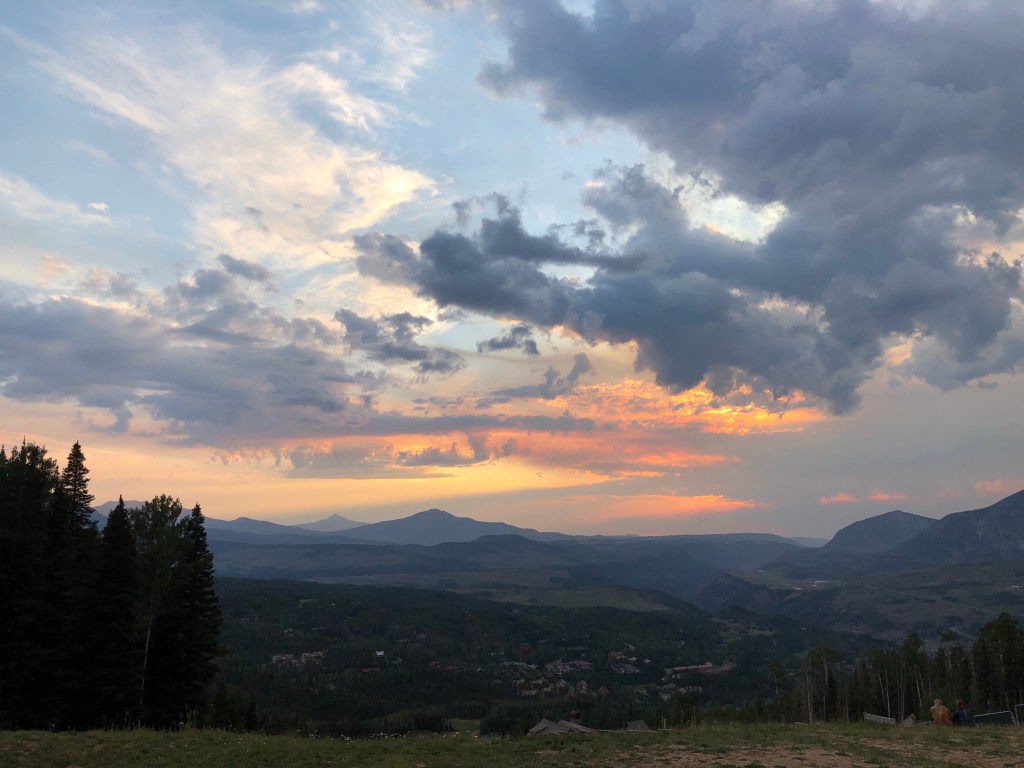
Alfred North Whitehead: An Introduction
-
‘Searching for Stars on an Island in Maine’ by Alan Lightman
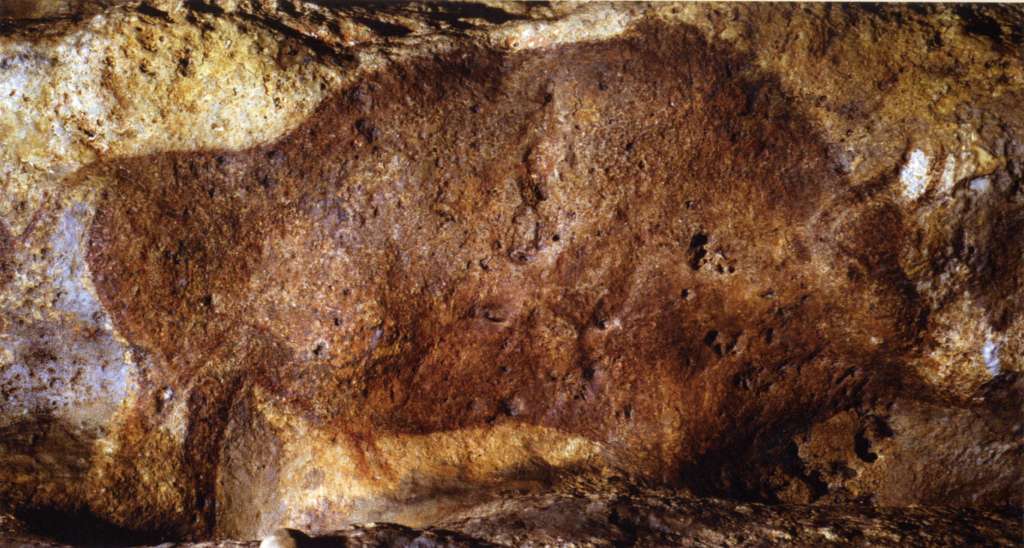
[Update 4/19: listen to the interview here] On Thursday at CIIS, I’ll interview physicist and novelist Alan Lightman, author of the just published Searching for Stars on an Island in Maine (2018). As of this writing, Lightman’s book is #1 in Metaphysics on Amazon.com.* Lightman begins his reflections in a cave in Font-de-Gaume, France, famous for its adornment of…
-
PDF of my Dissertation
Here’s a PDF of the version I submitted to the UMI database. I plan to substantially revise this before publishing it as a book sometime in the next year. But for now, I welcome feedback on the current draft. Cosmotheanthropic Imagination in the Post-Kantian Process Philosophy of Schelling and Whitehead
-
Philosophy of Mythology and Revelation (h/t Schelling)
I meant to post this back in August when Levi Bryant finally started blogging again, but it somehow got stuck in my drafts (a veritable grave yard of unfinished thoughts and undead ideas). The philosophical spirit Bryant expresses in his writing is rather unique in its capacity to inspire me to resist. I am very grateful to him for this.…
-
Nietzsche’s and Whitehead’s post-nihilist pluralistic process philosophies (part 2)
Since my post a few days ago (“The ‘innocence of becoming’: Nietzsche, Whitehead, and Nihilism as a Pathological Transitional Stage between Monism and Pluralism“), I’ve re-read chapter 4 of William Connolly’s The Fragility of Things: Self-Organizing Processes, Neoliberal Fantasies, and Democratic Activism (2013). Here is his summation of that chapter, which compared Nietzsche’s and Whitehead’s process philosophies: “It…
-
Letters on Cosmology and Theodicy
Below, I’ve copied an email thread with Dan Dettloff, who blogs at Re(-)petitions. I thought some of our other readers might want to chime in. Actually, I’d really like to hear other people’s responses to Dan’s question. I’ve not arrived at a satisfying answer to it, but I do think getting past “the problem of evil” will require a far…
-
Schelling & Whitehead inheriting Spinoza & Leibniz: God and the Modern World
I’ve just finished Matthew Stewart’s popular book The Courtier and the Heretic: Leibniz, Spinoza, and the Fate of God in the Modern World (2006). I was hoping to fill out my own understanding of the historical context surrounding these two thinkers. I was not disappointed on this front. Stewart combed the archives and stitched together…
-
Answering some queries about Whitehead
A college student emailed me with some questions about the technical details of Whitehead’s metaphysical scheme as laid out in Process and Reality. I figured I’d post my response to him here since I haven’t been able to blog much lately and don’t want anyone to think I’ve given it up, and because some of…
-
Audio from International Whitehead Conference in Krakow
Here is the audio of my presentation at the IWC last week in the philosophy of religion section: Here is a PDF of the paper I read, titled “Worldly Religion in Whitehead and Deleuze: Steps Toward an Incarnational Philosophy” Related articles 9th Annual International Whitehead Conference in Kracow, Poland (footnotes2plato.com) Also, thanks to Leon over…
-
Imagining Nature with Schelling and Whitehead
Schelling and Whitehead were speculative philosophers. This appellative, like that of metaphysician or theologian, may carry with it certain baggage that those of a skeptical or positivist bent are wont to do without. But aside from those epochal moments when thinkers are suddenly inspired by speculative imagination, or by the break through of concept creation,…
-
On the need for mediating concepts…
I posted this on FaceBook in a thread about humanities departments needing to get over Aristotle’s biology and was told to stop spamming, so I suppose I’d better just post it here instead. …………….. If contemporary biology is going to throw out “purpose” and “essence” as concepts, it needs to throw out correlate concepts like…
-
Psychedelics and Religious Experience (essay by Benjamin Cain)
After commenting on his guest post over on Three Pound Brain, I decided to spend some time on Benjamin Cain’s blog Rants Within the Undead God. I really like the way his mind works, even if I’m a bit more philosophically skeptical of scientistic claims to total knowledge of matter (whether “dead” or “alive”). I…
-
Questions concerning the place of imagination in cosmology… (while reading Ed Casey and Catherine Keller)
“In my view the creation of the world is the first unconscious act of speculative thought; and the first task of a self-conscious philosophy is to explain how it has been done.” -Whitehead Four of us met a few days back to discuss the first 75 pages of Ed Casey’s The Fate of Place: A…
 Footnotes2Plato