
Timothy Jackson and I went deep into descendental philosophy and aesthetic ontology, core concepts developed in my last book Crossing the Threshold (2023).
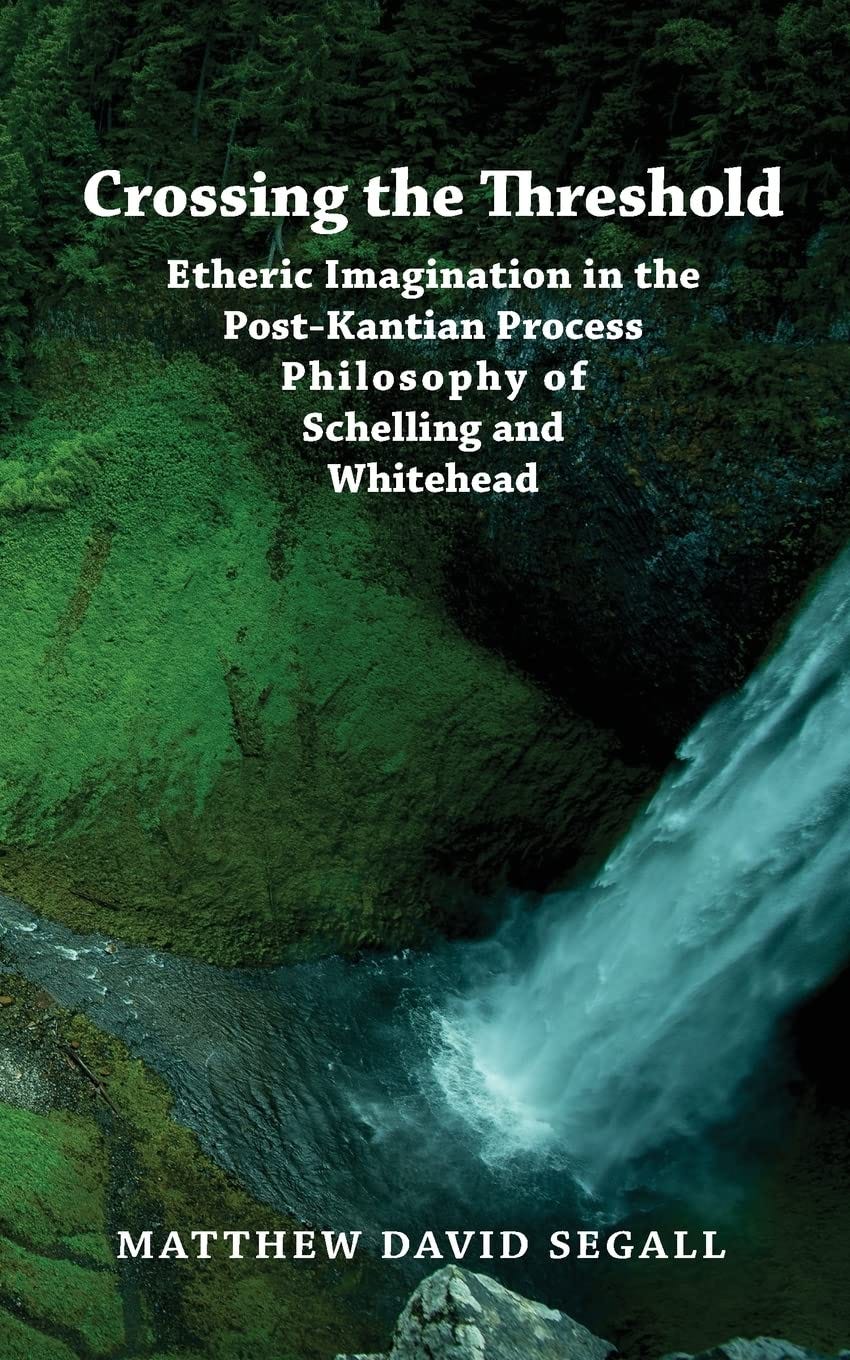
I try to argue against both scientistic neutrality and dogmatic theology. I believe that any attempt at thinking the most general conditions of reality inevitably touches the spiritual. If it did not then natural science would suffice and metaphysics would be superfluous. One of the premises of descendental philosophy is that our imagination is irreducibly cosmotheanthropomorphic. Our task as metaphysicians and as scientists is not to purge but to discipline and these anthropomorphisms, keeping mythopoetic language in play without letting it legislate.
Process-relational ontology (a.k.a. ontology as an account of ontogenesis) implies ontological pluralism: all philosophizing begins amid a buzzing democracy of fellow co-creators, with no Sky Daddy beyond experience that we might crib to impose fixed Universals or Laws upon the living flux. Metaphysics after the confrontation with nihilism is the search for shared sources of vital intelligibility that invite us into novel forms of togetherness without ever pretending to subsume otherness once and for all. Metaphysics must become synonymous with continual life reform, enabling a process of ongoing (trans)personal individuation as an antidote to politico-theological capture.
Metaphysics Today
Ultimately Tim and I are asking a surprisingly practical question that sits underneath arguments about science, spirituality, and politics: how do we make sense of a world that is constantly changing without pretending we can stand outside it? In other words, what can metaphysics still do for living, learning, and acting together?
First, we both agree there is no “view from nowhere.” Every claim about reality is made from somewhere by embodied persons with histories, needs, and hopes. Second, facts and values aren’t cleanly separable: what we notice as “fact” is already shaped by what we care about. Third, the right scale for moral and political life begins with persons in relationship, not with ready-made universal formulas. This is where Sloterdijk’s idea of “life-reform” helps: before we reach for grand revolutions or party platforms, we need practices that change how we live, perceive, and relate, habits that contribute to the always ongoing work of natural and cultural renewal.
In affirming an “aesthetic ontology” I’m saying that reality only shows up through appearances, images, and felt meanings. Imagination isn’t make-believe but how worlds get made. To say the world is made of images is to say it is made of value-facts or fact-values.
“Firstness” (Peirce) points to sheer, unfiltered presence before we fit it into reasons; Tim thinks staying close to this kind of particularity, especially in contact with nonhuman life, keeps philosophy honest.
Rather than treating a unitary physics as the one true bottom layer, we explore how biology’s feel for differentiation, adaptation, and historical genesis can teach physics something about time and the production of novelty.

 Footnotes2Plato
What do you think?